Jingisukan in Furano: Eating Hokkaido's Grilled Lamb at MASAJIN
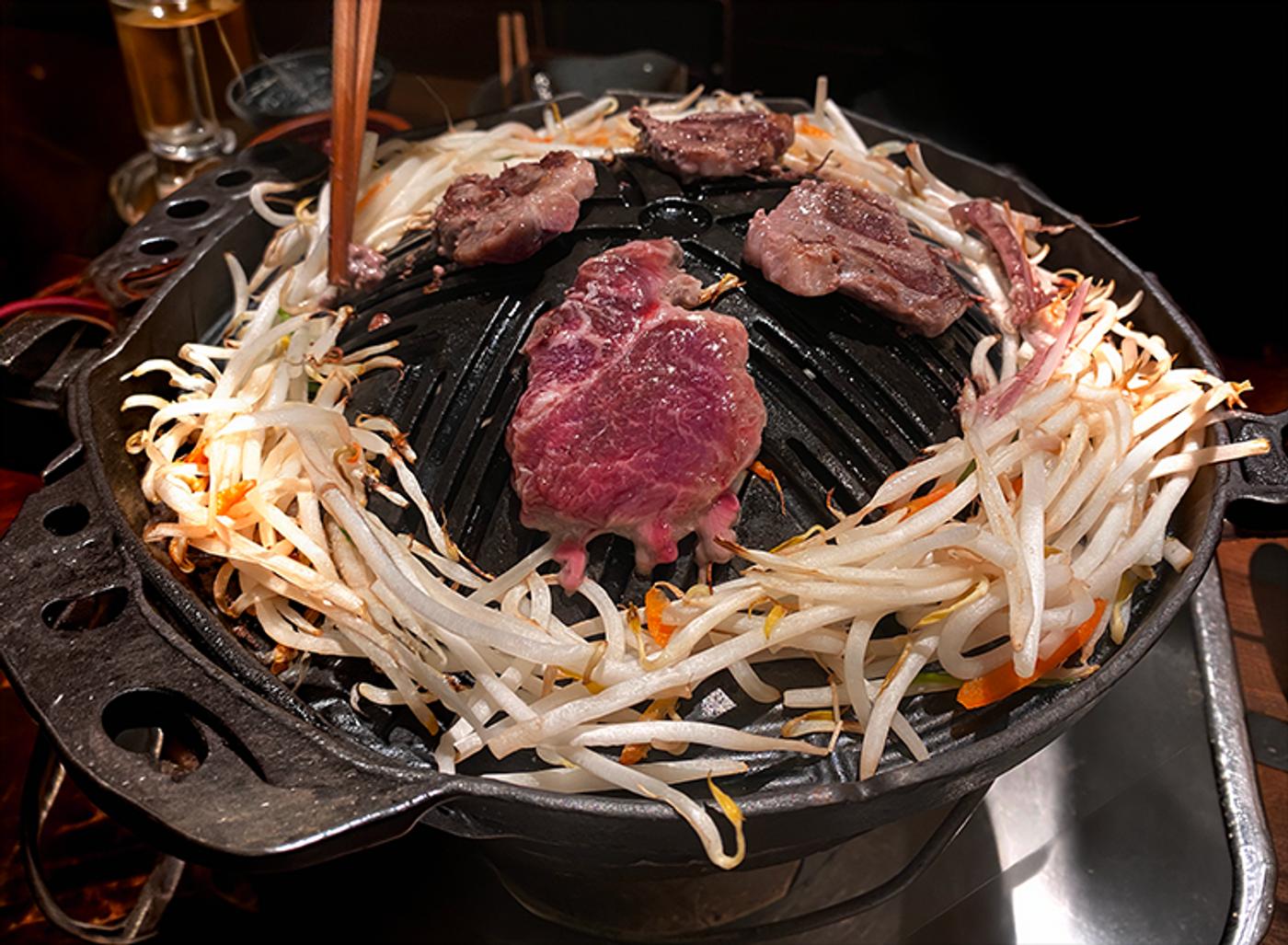
If you eat one thing in Hokkaido that you can’t easily get elsewhere in Japan, make it jingisukan (ジンギスカン) — lamb grilled on a distinctive domed cast-iron pan, with vegetables cooking in the juices that run down the sides.
It’s a Hokkaido staple rather than a tourist invention, and Furano is a perfectly good place to eat it after a day on the slopes.
What You’re Actually Eating
The pan is the whole point. It’s shaped like a helmet — the story is that it resembles a Mongolian soldier’s helmet, hence the name referencing Genghis Khan. Lamb goes on the raised centre, and bean sprouts, onion and other vegetables go around the rim, where they cook in the fat and juices running down.
You cook it yourself at the table. There’s no real skill required, but two things are worth knowing:
- Don’t overcook the lamb. Good thick-cut lamb here is meant to be pink in the middle. Treating it like well-done beef wastes it.
- The vegetables are not a garnish. The bean sprouts soaking up lamb fat around the rim are, for a lot of people, the best part of the meal.
MASAJIN, Furano
We ate at MASAJIN Furano (北海道ジンギスカン MASAJIN 富良野店) — the photo above is from that meal.
- It’s a branch of a Sapporo original, with several locations across Hokkaido
- Known for thick-cut lamb — noticeably chunkier than the thin slices you often get elsewhere, with a mild, clean fat rather than anything aggressively gamey
- Walkable from Furano Station, in what used to be the town’s drinking-and-dining quarter. If your hotel is central you won’t need a taxi — which matters on a winter evening when you’d rather not be driving anyway
- Budget roughly ¥5,000–6,000 per person for dinner
- Official site: masajin.jp
The thick-cut style is the thing to note. If you’ve had jingisukan before and found it too strong-tasting, this preparation is a different experience — the lamb reads as lamb, not as mutton.
Book Ahead — Seriously
The restaurant is small. This isn’t a place you can reliably walk into, and that’s true beyond just peak season. Reserve before you arrive in Furano rather than deciding on the night.
Ask for the Counter
If there are two of you, or you’re travelling solo, the counter is the better seat. You can see into the kitchen, and it’s easy to end up talking to the staff — which is a completely different evening from sitting at a table with your own group.
If you’d rather not be drawn into conversation, sit at a table. But if you like that sort of thing, ask for the counter when you book.
If You’re Nervous About Lamb
Worth being honest: if you actively dislike lamb, jingisukan will not convert you. But if you’ve only had it as a strong-flavoured roast, Hokkaido lamb served this way is milder than most people expect, and cooking it yourself means you control how far it goes.
Accessibility
We’d rather tell you this in advance than have you find out on the night: the toilet is small, and would be difficult to use in a wheelchair. The restaurant occupies a compact space generally.
If step-free access and an accessible bathroom are essential for your group, contact the restaurant directly before booking to check what they can accommodate — or plan your jingisukan meal somewhere with more room.
Practical Notes for Visitors
- Reserve. The room is small — see above. Between late December and February, evening seats in Furano generally go quickly.
- You will smell like the grill afterwards. This is a universal jingisukan truth. Don’t wear the coat you plan to fly home in.
- Portions are typically ordered by the plate of meat, shared across the table, rather than as individual set meals.
- Walkable from Furano Station and central hotels — no need to drive, which is the right call if you’re having a beer with it.
Where This Fits in Your Trip
Furano is the natural place to base yourself for a ski trip — see our ski resort comparison and where to stay. An evening jingisukan after a day on the mountain is about as Hokkaido as an evening gets.
Planning your dates? Build a route with our trip planner.